Best White Noise for Babies (and How Long to Use It)
By The LumaSleep Team · June 3, 2026 · 6 min read
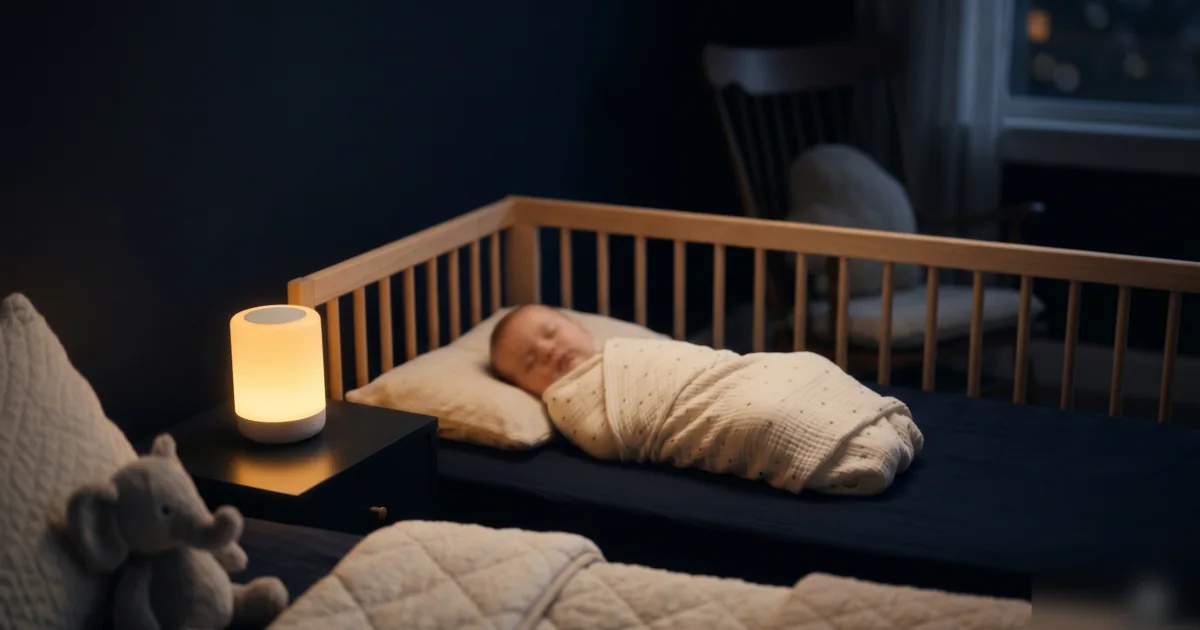
White noise can be a parent's best friend at bedtime — it mimics the constant whoosh a baby heard in the womb and helps them settle. The keys are choosing the right kind of sound and using it at a safe volume and distance. Here's a practical, safety-first guide.
Why white noise helps babies sleep
The womb is a surprisingly loud place — a steady rush of blood flow and muffled sound. To a newborn, total silence can feel unfamiliar, while a soft, continuous “shhh” feels reassuring and familiar. White noise also masks household sounds — a doorbell, a sibling, the TV — that might otherwise startle a sleeping baby.
The best type of white noise for babies
Go for low, steady, and smooth rather than sharp or high-pitched:
- Shushing or fan-like hum — closest to womb sounds.
- Brown noise — deep and low, often more soothing than bright white noise.
- Steady rainfall — gentle and continuous.
Avoid sounds with sudden peaks or tinny high frequencies, which can be more alerting than calming.
Is white noise safe for babies?
Yes — with two simple rules around volume and distance:
- Keep it below ~50 decibels — about the level of a soft shower. If you have to raise your voice to talk over it, it's too loud.
- Place it at least ~2 metres (7 feet) from the crib — never right next to your baby's head.
A baby's hearing is still developing, so erring on the quieter side is always the safer choice.
How long should you use white noise for a baby?
Using it for the whole nap or night, while your baby is settling and sleeping, is widely considered fine when the volume is safe. Some parents use a timer so it fades once the baby is in deep sleep; others keep it on low all night to mask household noise. Either approach works — do what helps your baby sleep best.
What about hairdryer or vacuum sounds?
You'll see “hairdryer” and “vacuum” tracks recommended for fussy babies, and they can work because they resemble womb noise. The important rule: use a recording at a safe distance — never run an actual appliance near your baby.
This article is general information, not medical advice. If you have concerns about your baby's sleep or hearing, talk to your pediatrician.
LumaSleep includes gentle, baby-friendly sounds — soft shushing, brown noise, andsteady rain — with a fade-out timer, so you can settle your little one and let the sound ease off on its own.
Frequently asked questions
Is white noise safe for babies?
Yes, when used at a safe volume and distance. Common pediatric guidance is to keep the sound machine below about 50 decibels and place it at least 2 metres (around 7 feet) from the crib rather than right beside it. Used this way, white noise can help babies settle by mimicking the constant whoosh they heard in the womb.
What is the best white noise for a baby?
Low, steady sounds tend to work best — a gentle shushing or rainfall rather than sharp, high-pitched noise. Many parents find that deeper brown noise, a fan-like hum, or recorded womb sounds settle babies fastest because they resemble what the baby heard before birth.
How long should you use white noise for a baby?
It is generally fine to use it for the whole nap or night while the baby is settling and sleeping. Some experts suggest turning it off once the baby is in deep sleep or using a timer, but continuous low-level white noise through the night is widely considered acceptable when the volume is safe.
Is it OK to use a hairdryer or vacuum sound for baby sleep?
A recording of these household sounds can work because they resemble womb noise, but never place an actual running appliance near a baby. Use a recorded version at a safe volume and distance instead.
Written by The LumaSleep Team
LumaSleep is a sleep-sounds and sleep-tracking app. Our guides are for general wellness and education — they aren't medical advice. If sleep problems persist, please consult a healthcare professional.
Related guides
Try it tonight with LumaSleep
70+ sounds, AI-generated soundscapes, a sleep timer and sleep tracking — all in one calm app.